 By
By 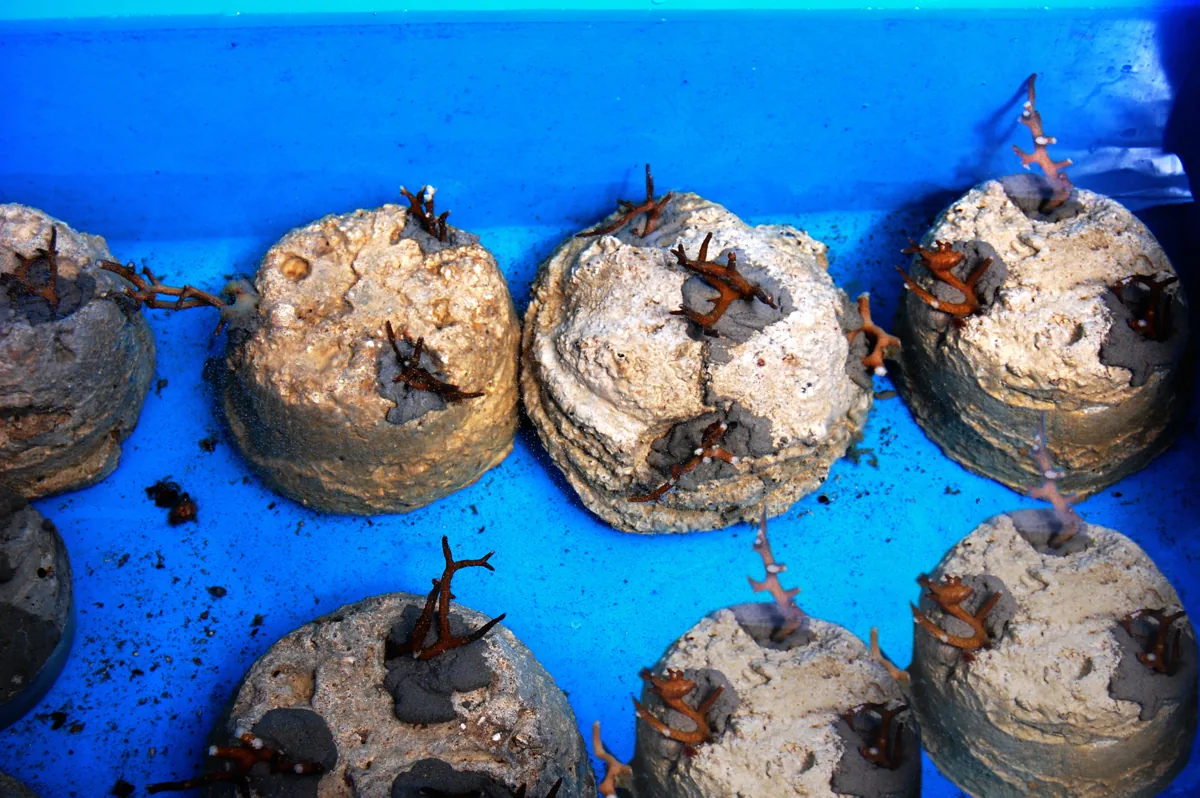
Florida's coral reefs are facing significant challenges, with once-dominant elkhorn and staghorn corals now considered "functionally extinct" in many areas. These vital species have declined so dramatically that natural reproduction has become exceedingly difficult, as remaining colonies are often too sparse for their gametes to successfully meet and fertilize.
To address this critical situation, Florida's coral restoration community is taking an active role in facilitating coral reproduction through a process known as mass spawning. This annual event, occurring days after the July full moon, involves the release of eggs and sperm by mature coral colonies. When sufficient numbers of healthy corals spawn simultaneously, their genetic material can combine in the water, leading to fertilization and the potential settlement of new colonies on degraded reefs.
Recognizing the low odds of natural success, organizations are stepping in to act as "matchmakers" for these corals. Ken Nedimyer, technical director at Reef Renewal USA, highlighted the urgency, stating that rising ocean temperatures and the functionally extinct status of coral populations make natural recovery unlikely. "The temperature is rising so fast, and the population is functionally extinct — it’s basically gone — so there’s no chance it can recover naturally through natural selection," Nedimyer explained.
The devastating marine heat wave of 2023 significantly impacted Florida's reefs, prompting scientists to focus on preserving genetic material from resilient coral survivors. One key strategy involves maintaining living coral biobanks, while another, central to recent spawning events, aims to create new genetic combinations from existing coral genotypes. The hope is that these new offspring will possess greater resilience to future ocean conditions and can eventually be outplanted onto damaged reefs.
Reef Renewal USA's offshore nursery in Tavernier has been instrumental, housing a substantial collection of mature elkhorn and staghorn corals. These corals were not randomly selected; many were left in the nursery during the 2023 heat wave, providing a unique opportunity to observe their responses. Nedimyer noted that detailed records were kept on which colonies bleached and which did not, allowing restoration efforts to focus on those demonstrating heat tolerance. "We scored every coral during that summer, and we took photo records," Nedimyer said. "Now we know which ones bleach and which ones don’t, and we focus most effort on the ones that don’t."
The current scientific and restoration goal is to determine if these heat-tolerant traits can be passed to the next generation and potentially enhanced through selective breeding. Researchers are utilizing some of the 2023 survivors in this year's spawning efforts, leveraging the valuable data gathered on heat resistance.
Nedimyer reported significant success in the spawning efforts. He indicated that 100 large elkhorn colonies, representing 48 unique genotypes (including 22 identified with exceptional heat resistance), were prepared for spawning. Additionally, over 200 more elkhorn colonies with 68 additional genotypes and hundreds of staghorn colonies with 18 unique genotypes were available. "The corals are spawning like gangbusters," Nedimyer told the Keys Weekly on August 1. Later updates confirmed the success, with Nedimyer stating on August 4, "The corals went wild last night. Best night ever."
Over nine nights, dive teams collected coral gametes from the Reef Renewal nursery and transported them to a temporary laboratory at John Pennekamp Coral Reef State Park. There, scientists worked diligently to separate the eggs and sperm, create genetic crosses, and begin cultivating the resulting larvae. Some sperm is also being cryopreserved to establish a genetic bank for future restoration initiatives.
This year's comprehensive effort is supported by NOAA's Re5 initiative and involves 11 leading coral conservation and restoration organizations. Partners such as Mote Marine Laboratory, the Florida Aquarium, the University of Miami, and SECORE International are contributing their expertise in areas like fertilization, larval development, and coral propagation. Nedimyer described the collaboration as a "perfect storm," bringing together the best resources and expertise at a crucial time. "We’ve all come together at the right time. Best of the best working together," he said.
While the intensive spawning and collection phase is concluding, the critical work of growing and outplanting the baby corals is just beginning. These young corals, representing new genetic diversity, offer renewed hope for the future of Florida's struggling reefs. For more information on coral restoration efforts, resources are available through organizations like Florida Realtors, which supports state initiatives.